

Can I Raise Farm Animals Where I Live
Chickens are low-maintenance, leave a minor livestock footprint, and are adaptable to many different environments. Other farm animals may not be as easy to take care of as chickens and may require more fourth dimension to manage.
Before you add together other animals to your land, you must ostend that your zoning requirements specifically allow farm animals such as horses, cows, goats, sheep, pigs, geese, ducks, or republic of guinea fowl. Here's where a land homesteader may have an reward over those in the suburbs or cities. Rural areas are nearly likely are zoned for other subcontract animals and have the space and the capabilities for housing them. Always check your city and county ordinances first, but every bit you lot did when planning for chickens.
 © Eric Isselee / Shutterstock
Calculation large animals to your chicken farm
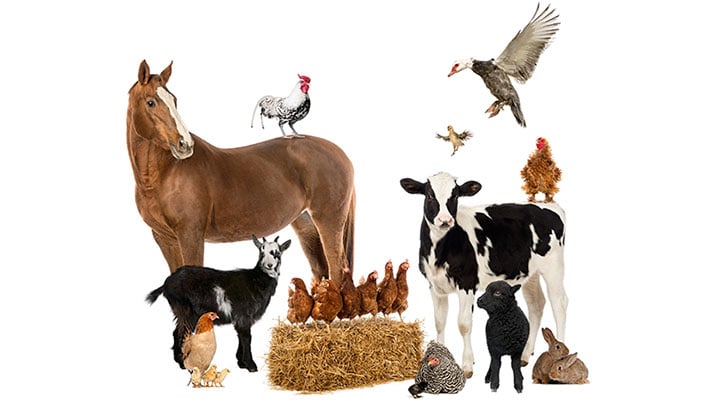
Oddly plenty, chickens get along with most farm animals fifty-fifty though they have such a dominant pecking social club within their flock. Gratuitous-ranging chickens go about their business organisation, happily foraging to their hearts' content no matter what other farm animals are around.Every bit social creatures, chickens can comingle among larger subcontract animals such as horses, donkeys, llamas, cows, sheep, and goats. Although these animals are uniform with chickens, yous should consider the run a risk of underfoot injury and unintentional trampling.
In a barnyard state of affairs, chickens can add together a footling companionship and stability for larger farm animals. In return, in that location is condom in numbers, and having big animals near chickens may discourage predators.
Horses and cows
A large flock of free-pasturing chickens can cross-graze after cows and horses, eagerly picking through dung and cow patties for larvae, maggots, and parasites. About parasites are species-specific, and chickens safely interrupt the parasite lifecycle past eating them.Chickens also go along fly populations downwardly by eating maggots, and they helpfully spread manure and mix it back into the soil. Chickens also consume undigested feed and seeds that are passed through manure, thus saving you money past reducing feed waste.
Do non allow chickens graze with livestock that have been given chemic de-wormers or any medication.
Goats and sheep
Goats and sheep are condign almost equally pop every bit chickens on small-farm homesteads. You can keep goats, sheep, and chickens together in one enclosed pen. Chickens can pick up grain the goats and sheep driblet. The presence of larger animals discourages predators. Llamas and donkeys are particularly good at protecting sheep and goats against coyotes and dogs, if they are kept in the same pen.Keeping goats, sheep, and chickens together in a pen may also limit diseases and parasites.
Goats are great jumpers. They adopt taking chunks out of trees and shrubs and they tin can be mischievous in their quest to reach delectable landscape. Don't await goats to supersede your lawnmower; goats won't eat grass.
Pigs
Pigs won't work as companion livestock because they're omnivorous and may injure or swallow your chickens. Pigs need their own environment.Adding other fowl to your chicken farm
Other farmland birds aren't as like shooting fish in a barrel to train equally chickens, simply they crave less space than animals similar sheep and horses so they may work for suburban and urban settings. If your metropolis zoning permits other fowl, y'all can consider ducks, geese, turkeys, guinea fowl, and peacocks.Ducks
Some people adopt duck eggs to chicken eggs because of their size and richness. You can raise ducks for meat, besides. But ducks are messier than chickens. Because of their webbed feet, ducks don't aerate soil but instead compact it over time, especially in muddied areas.Ducks need admission to a make clean source of h2o to swim in, beverage from, cleanse themselves, and mate. Snails and slugs aren't favorite foods of chickens, just ducks will eat snails in your garden. Ducks really like grass, more than chickens do. Only don't firm ducks with chickens; there is potential for disease.
Ducks can bond with you if yous raise them from ducklings, simply they tend to exist flighty by nature. Indian Runner ducks are fun to watch in the garden because they run upright like wobbly wine bottles. Ducks can successfully gratuitous-range with chickens.
Geese
There's something romantic about a pair of geese roaming your garden; for one thing, they stick together equally a pair because they mate for life. Your geese would prefer to have water to play in, but information technology'due south not an admittedly necessity for them as it is for ducks.Like ducks, geese will compact your soil. Geese are big and tin can exist intimidating as they run at you, honking with open wings. For this, they're cracking watchdogs. Geese bite sometimes, and so you'll desire to keep modest children away from them.
Geese are territorial, and they may bully your chickens from time to time. Simply geese are generally compatible with chickens in a free-range surround. As far as housing goes, it's best to keep geese in a separate protected pen of their own. Although big, geese can still fall prey to predators because they're impuissant and ho-hum on their webbed anxiety.
Geese thrive on grass and are considered weeders. However, they tend to eat everything, not simply weeds. Geese like grain, as well.
Turkeys
Turkeys are better for country dwellers than urbanites. They're big, snobby birds that dominate the barnyard and your chickens. Turkeys will trample your plants; they can be curious and sometimes appear to stalk other animals. Watch young children around turkeys.Turkeys and chickens can comingle in a free-range surroundings but are best housed separately. Chickens can transmit a affliction chosen blackhead to turkeys, so keep both pens clean.
Turkeys can swallow either a custom non-medicated feed or chicken feed. If you intend to raise turkeys for meat, you will want to feed them the custom turkey feed considering it'due south higher in protein. Turkeys also enjoy eating corn and oats, sunflower seeds, and many greens such as lettuce, Swiss chard, and cabbage.
Republic of guinea fowl
Guinea fowl are interesting creatures. They can be wild and loud — yous'd exist surprised how loud! Similar geese, republic of guinea fowl are adept watchdogs and will allow you know if something is amiss; they won't bite interlopers, though.Guinea fowl are prized for their tender, slightly gamey meat, their delicious eggs, and their decorative feather. Guinea fowl can live with chickens and even mate with them, producing offspring that are sterile.
Guinea fowl adopt to roost in trees, and they have to exist trained to come into the coop at nighttime; this takes patience on your role. A republic of guinea hen will make a nest and lay her eggs in random, hard-to-discover places. They're great foragers for bugs, but they don't scratch. They're less subversive to your garden than chickens.
Peacocks
In some movies, you'll see peacocks on an undulating light-green lawn in front of a stone fountain with a 1000 estate in the groundwork. Who wouldn't want one or ii on their backyard or perched in the trees?Raising peacocks is rising in popularity, and they can co-exist with chickens in a costless-range environment. They provender on grass, bugs, seeds, and insects; and they tin can eat a commercial poultry feed. As with chickens, peacocks need to take grit in their nutrition to assimilate their nutrient.
The downsides: Peacocks require 80 square feet per bird in their housing. When breeding, they prefer to be by themselves. Peacocks can go wild in a free-range environment. And and so in that location's their deafeningly loud noise.
Their beauty is undeniable, but it's best to practice extensive research earlier deciding whether raising peacocks is right for you.
Source: https://www.dummies.com/article/home-auto-hobbies/hobby-farming/chickens/farming-other-animals-with-free-range-chickens-165212/
Posted by: williamloyed1964.blogspot.com
0 Response to "Can I Raise Farm Animals Where I Live"
Post a Comment