

What Is The Greatest Threat To Most Species? What Happens When An Animal Is Illegally Traded
In recent years the bear on of illicit wild animals merchandise (IWT) on species has reached unprecedented levels.
This merchandise, estimated to be worth between $7 – 23 billion a year, is the world'south fourth most lucrative trafficking industry after drugs, humans and weapons representing a serious threat to the beingness of some of our best loved species and the ecosystems on which they rely:
Elephants:
- Betwixt 2007 and 2014, there was a thirty% turn down in the African savannah elephant population the majority of which were slaughtered for ivory.
- African elephant populations in Fundamental and Westward Africa confront the most serious levels of illegal killing. Poaching of wood elephants in central Africa, has led to populations in the region suffering a sixty% decline in x years from 2002-2012.
- Nigh estimates propose that the African elephant death rate is higher than the birth charge per unit – meaning elephant populations beyond the unabridged continent are in decline.
- Asian elephants number nether 50,000 individuals and are found in less than 10% of their onetime range.
Tigers:
- Tiger numbers have fallen from an estimated 100,000 individuals a century ago to less than 4,000 today - a subtract of 96%.
- Between 2000 and 2012 at least ane,425 tigers were killed by poachers.
- It'due south estimated that over 100 tigers are poached each yr.
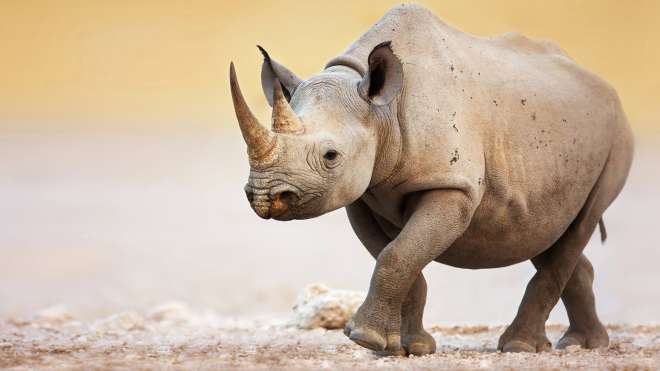 Rhinos:
- Poaching of Rhinos in South Africa grew 9000% from 2007 to 2014 with over vii,000 rhinos poached in this time.
- one,028 rhinos were lost in South Africa in 2017 lone, that's a slight decline of 26 from the twelvemonth before.
- Three of the earth's 5 rhino species are critically endangered and the estimated global rhino population is just 29,000.
- At that place are fewer than 4,000 Asian one horned rhino's in the world and they are still threatened past poaching.
Pangolins:
- It is estimated that well over 1 million pangolins accept been killed and illegally traded in the past fifteen years – making the pangolin the virtually heavily trafficked wild mammal on the planet.
- The Pangolin, the but scaled mammal, is traded for its meat and scales.
- Despite receiving the highest level of protection nether CITES (encounter below) large scale seizures go along to accept place with a growing frequency of multi-tonne seizures of scales, representing thousands of dead individuals.
Sharks:
- In our oceans many shark species are being driven to extinction equally massive levels of overfishing, estimated at over 100 million individuals killed annually, takes its toll.
- It is estimated that lxx one thousand thousand sharks are killed each year merely for their fins, which is perceived as a delicacy in the largest demand markets.
Wildlife trade is regulated through the Convention on International Trade on Endangered Species (CITES) to which 183 countries are signatories, and Delegates deliberate on problems that accept a major influence on the fate of many species impacted by merchandise. ZSL conservationists work within CITES to support conservation of species threatened by trade.
ZSL is also working closely with governments around the world to accost IWT. Implementing projects around the world, working with national governments and local communities, to protect wildlife, back up law enforcement that targets trafficking networks, empowers local communities affected by IWT and reduced demand for threatened wildlife.
The UK regime recently hosted an intergovernmental conference on IWT in London. We worked with the Foreign Commonwealth Office, the Section of Environments, Food and Rural Diplomacy and the Department of International Development to back up the event. The conference aimed to deliver concrete outputs to address this crisis, to help countries control poaching on the basis, treat wild fauna crime every bit a serious criminal offence and effectively enforce laws, provide incentives for communities living with IWT, mobilise the private sector to play its part in combating IWT equally well every bit to take steps to reduce the demand in consumer countries that is ultimately driving the merchandise.
Detect out more about the Illegal Wildlife Trade crisis
Source: https://www.zsl.org/conservation/how-we-work/illegal-wildlife-trade-crisis/illegal-wildlife-trade-impacts
Posted by: williamloyed1964.blogspot.com
0 Response to "What Is The Greatest Threat To Most Species? What Happens When An Animal Is Illegally Traded"
Post a Comment